 Click here
to view the working hours of our facilities during the Prophet Mohammed’s Birthday holiday.
x
Click here
to view the working hours of our facilities during the Prophet Mohammed’s Birthday holiday.
x
Dubai Health Genomic Medicine’s Study Published in Nature Communications
 27 Feb 2026
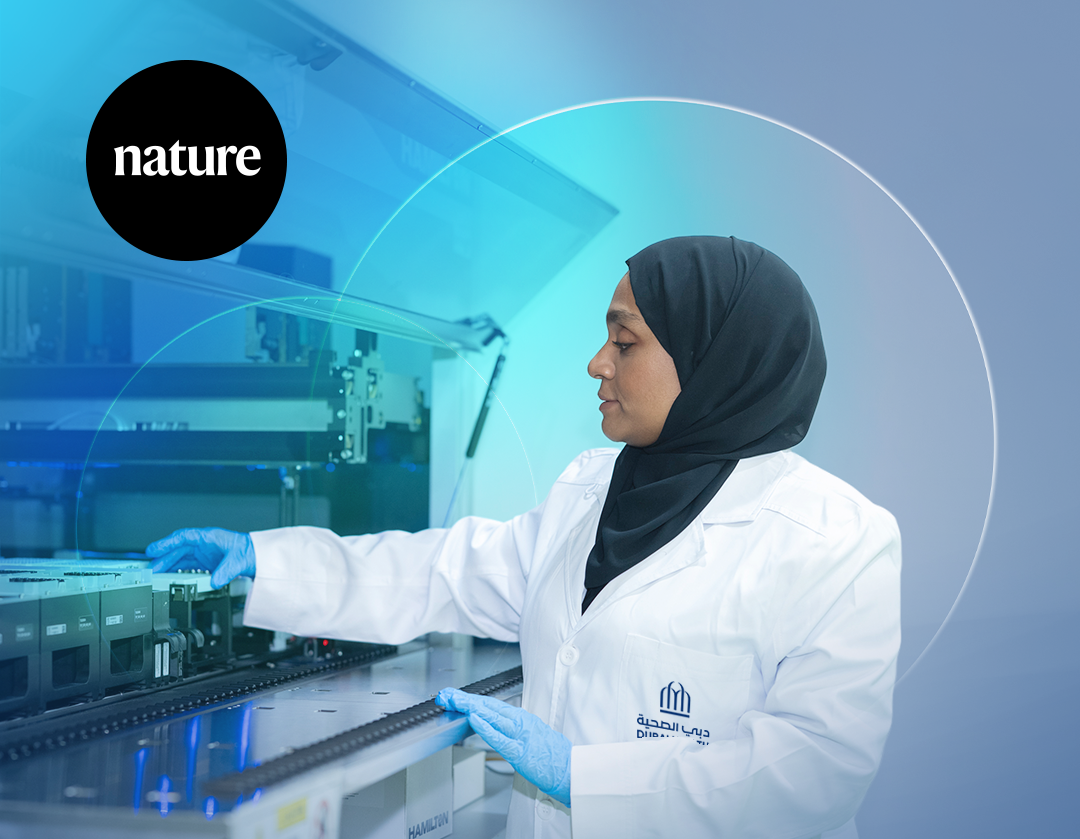
In a step that further strengthens Dubai’s global standing in advanced scientific research, a research team at Dubai Health has published a new scientific study in the international medical journal Nature Communications, revealing innovative techniques for the detection and diagnosis of rare diseases using genomic medicine.
The study, titled "Long Read Sequencing Enhances Pathogenic and Novel Variation Discovery in Patients with Rare Diseases," provides a scientific framework to improve the diagnostic accuracy of rare diseases. It demonstrates how advances in clinical genetic testing can increase precision and lead to more effective medical tools, directly supporting the healthcare system and Dubai Health’s Patient First commitment.
Dr. Rasha Buhumaid, Dean of the College of Medicine and Graduate Medical Education at Mohammed Bin Rashid University of Medicine and Health Sciences (MBRU), the learning and discovery arm of Dubai Health, said: “This success reflects our commitment to fostering scientific research within Dubai Health and our strategic partnership between academic inquiry and clinical practice. It is a purposeful step toward developing medical practices that enhance wellbeing and elevate the quality of patient care."
She added: “Fatma’s achievement demonstrates the strength of our graduate programs and the vibrant research culture across our academic health system. Through our Master’s and PhD programs in Biomedical Sciences, MBRU is dedicated to preparing research professionals equipped with rigorous scientific thinking and advanced research skills, fostering a discovery-based learning environment that supports sustainable development in healthcare. These research-intensive programs combine rigorous academic training with hands-on experience across Dubai Health’s clinical and research facilities. Students benefit from competitive financial support, including full scholarships for PhD candidates and substantial aid for Master’s students, enabling them to pursue high-impact research.”
Diagnostic Accuracy
Fatma Rabea, Emirati PhD student at MBRU, and spokesperson for the research team, explained that the study plays a key role in enhancing the accuracy of diagnosing rare diseases by using modern techniques to uncover their genetic origins. This approach supports evidence-based treatment decisions and helps elevate the standard of care for these patients, empowering them through precise diagnosis.
Fatma noted that the study analyzed clinical samples, demonstrating that long-read genomic sequencing techniques significantly improved diagnostic accuracy for rare diseases by identifying genetic variants missed by traditional methods. This led to new diagnoses for approximately 10% of the cases studied, providing essential treatments and enhancing wellbeing.
The Hamdan Medical Research Award
The study was honored with the prestigious Arab Award for Research in Healthcare, as part of the Hamdan bin Rashid Al Maktoum Foundation for Medical and Educational Sciences 2025 Medical Awards. This honor recognizes the meaningful contributions MBRU students make in advancing discovery and contributing to globally relevant research. This accolade recognizes the study's substantial scientific contribution to improving diagnostic precision for rare diseases, which directly enhances overall patient care.
To access the study, visit https://www.nature.com/articles/s41467-025-57695-9.
Dubai Health’s Genomic Medicine Center Earns CAP Accreditation
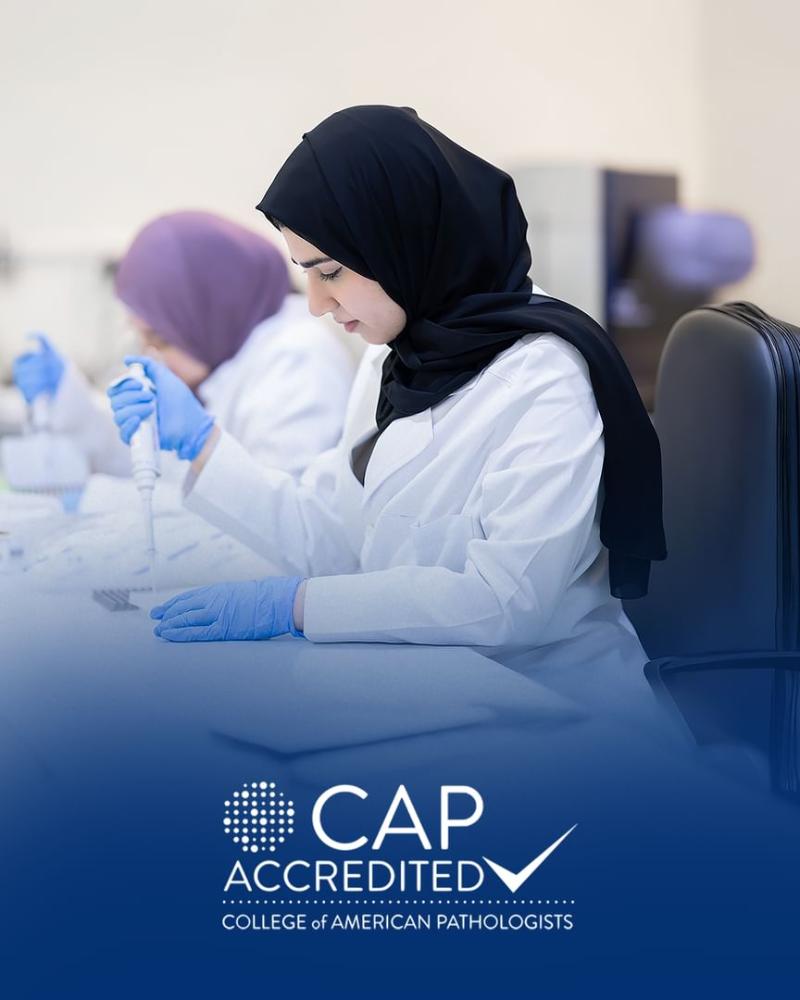
Dubai Health announced that its Genomic Medicine Center (GMC) has earned accreditation from the College of American Pathologists (CAP), the globally-recognized authority in laboratory quality assurance, marking a significant milestone that reflects its commitment to the highest global standards of quality, accuracy, and safety.
This accreditation is awarded following a precise evaluation conducted by a panel of experts to verify laboratories’ compliance with internationally recognized standards in the field. It is considered one of the world’s leading medical laboratory quality assurance programs, aimed at achieving the highest levels of excellence in laboratory practices.
Dr. Ahmad Abou Tayoun, Director of the Genomic Medicine Center at Dubai Health, expressed his profound pride in the center’s achievement in obtaining accreditation from the College of American Pathologists (CAP), a milestone that reflects Dubai Health’s commitment to the highest internationally recognized quality standards and its dedication to providing high-quality services to patients and physicians. He added that this recognition further strengthens the center’s position as a leading hub for genomic medicine and advanced research.
Dr. Abou Tayoun further explained that Dubai Health’s Genomic Medicine Center supports the overall healthcare system, from analyzing genomic data to providing consultation and follow-up for individuals and families. This approach enables medical professionals to make precise, evidence-based treatment decisions. The center also provides a comprehensive range of genetic tests and analyses through its molecular genetics, genomics, and cytogenetics laboratories, including genetic diagnosis of heredity conditions and rare diseases and the premarital genetic screening program. The center contributes to supporting public health programs in the UAE.”
The Genomic Medicine Center also supports Dubai Health’s integrated academic health system model, as it is consisted of a team of physicians and researchers alongside students from Mohammed Bin Rashid University of Medicine and Health Sciences, the arm of learning and discovery of Dubai Health. This collaboration aims to transform biomedical discoveries into practical solutions that contribute to advancing healthcare services.

New Discovery at Mohammed Bin Rashid University of Medicine and Health Sciences Identifies Genetic Cause of a Rare Childhood Growth and Developmental Condition
Scientists at Mohammed Bin Rashid University of Medicine and Health Sciences (MBRU), which leads the Learning and Discovery missions of Dubai Health, have identified a novel genetic disorder affecting children’s growth and development. Published in a leading journal, The American Journal of Human Genetics, this study identifies a problem in the FBXO22 gene, which causes various health issues in children, including growth restriction, intellectual disability, and other physical challenges. This discovery could enable more accurate diagnosis and genetic counseling, supporting informed family planning and long-term care for affected families.
Professor Alawi Alsheikh-Ali, Chief Academic Officer of Dubai Health and Provost of MBRU, said, “At Dubai Health, research is central to how we advance patient care and serve our communities. This study highlights the power of global collaboration and the impact of translational research at MBRU. We are proud to lead this important genetic discovery as part of a global collaboration and generate knowledge that holds real promise for patients and their families.”
The study included an international team of scientists and clinicians, led by Dr. Ahmad Abou Tayoun from MBRU. The team identified that mutations in the FBXO22 gene impair its function, leading to various developmental abnormalities. These include severe pre- and postnatal growth restrictions, intellectual disability, and additional complications affecting the cardiac, gastrointestinal, and skeletal systems.
Dr. Ahmad Abou Tayoun, Associate Professor of Genetics at MBRU and Director of Dubai Health’s Genomic Medicine Center, said, “This study demonstrates how genetic research on local populations can uncover the root causes of complex pediatric conditions, provide a framework for more accurate diagnosis and counseling, and contribute to global efforts to better understand the human genome. Through this discovery, we can provide a framework for more accurate diagnosis and genetic counseling, offering affected families meaningful answers to support future family planning. This work also highlights the importance of close collaborations with clinical teams, particularly the endocrinology team led by Dr. Nandu Thalange, who first identified and investigated the index case.”
The study included 16 cases from 14 families across the UAE, Saudi Arabia, Oman, and Lebanon. The team used advanced short- and long-read sequencing technology to study the children’s DNA and find the FBXO22 problem. The condition showed overlapping features with other known genetic disorders, further highlighting the critical role of FBXO22 in normal growth and development.
Dr. Fahad Ali, Assistant Professor of Molecular Biology at MBRU, said, “A key aspect of this study was identifying a unique marker in the blood that serves as a molecular fingerprint for this condition. This discovery could pave the way for a simple diagnostic test, enabling earlier detection and better support for affected families.”
The study was supported by funding from the Al Jalila Foundation, MBRU, and the King Abdullah University of Science and Technology (KAUST) Center of Excellence for Smart Health, among others. It reflects MBRU’s ongoing mission to address pressing health challenges through innovative research and global partnerships.

Advanced Genetic Blueprint Could Unlock Precision Medicine
Creation of a comprehensive genetic representation for more than 2.5 billion people across the Middle East and South Asia could make a major contribution towards advancing precision medicine, a publication in Nature Medicine reveals.
Traditional genetic research has mainly relied on linear reference genomes, which is like having a single, standard version of human DNA that scientists compare everyone's genetic information against. This works well for studying individual genetics but does not capture all the complexities and differences found in diverse populations.
The Arab Pangenome Reference (APR) takes a different approach. Instead of relying on just one "standard" genome, it includes a collection of many different genetic versions specific to the Arab population. This helps scientists see the full picture of genetic diversity, including variations and unique traits that might be missed using the old method.
The international group of researchers led by the Center for Applied and Translational Genomics (CATG) at Mohammed Bin Rashid University of Medicine and Health Sciences, in partnership with the University of Birmingham, Dubai published their findings today (4 Mar) in Nature Medicine. Authors included Nasna Nassir, Mohamed A. Almarri, Hosneara Akter, Hamda Hassan Khansaheb, K. M. Furkan Uddin, Ahmad Abou Tayoun, Stefan Du Plessis, Marc Haber, Alawi Alsheikh-Ali and Mohammed Uddin. Nature Medicine is recognized for its rigorous peer-review process and its commitment to disseminating high-quality studies and opinion pieces that advance our understanding of human health.
Professor Alawi Alsheikh-Ali, Deputy CEO and Chief Academic Officer of Dubai Health and Provost of Mohammed Bin Rashid University of Medicine and Health Sciences, commented: “This publication provides a comprehensive and inclusive perspective on human genetic diversity, ensuring that the unique genetic landscapes of the Middle East and South Asia are represented. Integration of these pangenomes into global genomic databases will unlock new discoveries and represents a vital step in advancing health for humanity.”
Professor Yusra Mouzughi, Provost University of Birmingham Dubai commented: “At the University of Birmingham, we pride ourselves on ‘research that changes lives’. This latest research demonstrates the impact of our strong partnership between University of Birmingham Dubai and Dubai Health to deliver research that fundamentally advances science and discovery, creating a new understanding of genetic diversity amongst Arabs and enabling a deeper understanding of the genetic origins of disease.”
Dr. Mohammed Uddin Director of the Center for Applied and Translational Genomics (CATG) at Mohammed Bin Rashid University of Medicine and Health Sciences, commented: “The APR is the first reference genome constructed to capture the genetic diversity among Arabs. This landmark resource aims to enhance early diagnosis and personalized treatments for genetic diseases that are prevalent in the region. This research uncovered millions of base pairs of novel human DNA sequences, which will contribute to a deeper understanding of the genetic origins of diseases and traits. Our goal is to construct graph pangenomes encompassing the entire Middle East and South Asia, aiming to accelerate the adoption of precision medicine in these regions.”
Co-author Marc Haber, from the University of Birmingham Dubai, commented: “The precision offered by pangenomic approaches is particularly beneficial for studying rare and previously undetected disease-causing variants which paves the way for better understanding and treatment of these conditions, leading to new discoveries in population genetics, disease susceptibility and drug response.”
Professor Stefan Du Plessis, Dean of Research and Graduate Studies at MBRU commented: “At Dubai Health, our Discovery Mission embodies our commitment to innovation, research, and the advancement of healthcare. This publication emphasises the importance of collaborative research in making advanced genomic references a routine part of diagnostics and healthcare. As we move forward, this comprehensive genetic approach promises to reshape our understanding of health and disease, ultimately improving healthcare for millions.”